


success *cart_check_cart*
Home
lt
{{cart.item_count}}

*cart_empty*

Cart

The e-booklet

Paquita

Paquita

Alongside Édouard Deldevez, the score also includes music by Cesare Pugni, Ludwig Minkus, Adolphe Adam, and Friedrich Burgmüller “Paquita” is one of the jewels of the classical ballet repertoire, constantly reborn on the stages of world theatres. First performed in 1846 at the Paris Opera (choreographer Joseph Mazilier), and a year later staged by the famous Frenchman Marius Petipa at the Imperial Ballet of St. Petersburg, this work still fascinates ballet lovers today, almost two hundred years after its premiere. On our stage, “Paquita” is brought to life by choreographer Manuel Legris, already known to the Lithuanian audience from the ballet “Le Corsaire”. The action of the performance takes place in Triana, the historic Gitano quarter of the Andalusian capital of Seville, the birthplace of Gitano dance and Spanish flamenco. The plot of the work is based on a real historical context, facts and figures, and although today it is difficult to distinguish between reality and fantasy, the story told in the production begins on 12 February 1853, when Spain was ruled by Queen Isabella II, and the whole of Seville was celebrating the opening of the Triana Bridge. Along with other inhabitants of Triana, Paquita, who is participating in the celebration, meets a charming French officer, Lucien. Unfortunately, the high-born gentleman is prevented from marrying Paquita because of her origin... In the end, however, the plot twists turn out successfully, and the audience is rewarded with a wonderful ballet performance – music and dances of Spanish colour, images of the pure beauty of the Grand Pas, and a good mood. Premiere: 21 May 2026
1.00
Carmen

Carmen

It is probably appropriate to start our story about "Carmen" with a fact that it is the most often staged opera in the world, while its author Georges Bizet remains in the operatic history primarily as an author of that single masterpiece. 135 years have passed since its premiere at the Opéra-Comique theatre in Paris, and even to this day no other operatic work can equal G. Bizet‘s Carmen when it comes to the number of different stagings. "Carmen" wasn’t blessed with instant success - her first appearances were marked by scandal rather than acknowledgement. However, its popularity that emerged after Bizet’s death is still very much alive today. In his plans Bizet had more than 30 opera drafts, but before his death he managed to finish only four of them, excluding "Carmen". Despite that, the glory of "Carmen" is enough to keep the composer’s spirit among us. Each country has its own understanding of femininity. The Spanish like strong women, thus the character of Carmen is always a challenge for any singer. She is fatalistic, hedonistic, living only in current moment and not looking forward. Carmen is ready to give herself away, fully understanding the power of such action, however, she will demand the same dedication from anyone she gives herself to. “Free, independent mistress of all of her wishes”, Carmen radiates destructive, wild passion and unexplainably attractive power. She is probably the most charismatic character in operatic history. Don Jose, charmed by gypsy’s whims, looses everything - his world, once moral, calm and virtuous, is now shattered to pieces. He hopes that his love will keep Carmen, maybe even redeem her... Sadly, his hopes are only illusions. The character of "Carmen" keeps returning: sometimes surrounded by the original spirit of the work, or put in today‘s context, ascetic or decorated with lush stage designs. Every time she achieves new incarnations, remaining true to her essence - she intrigues, rouses wonder, fear and admiration. ✓ Surtitles in Lithuanian and English Premiere: 20 November, 2009
1.00
La fille mal gardée

La fille mal gardée

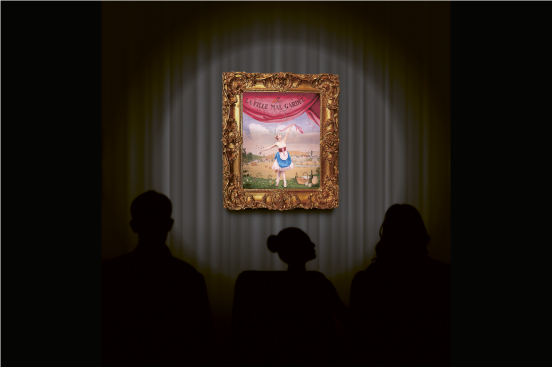
La Fille mal gardée is a comic ballet and one of the oldest and most important works in the modern ballet repertoire, having been kept alive throughout its long performance history by way of many revivals. This version is one of the most vibrant and joyous works of the English choreographer Frederick Ashton, which premiered at the Royal Ballet of London in 1960. The notable French choreographer Jean Dauberval’s 1789 work served as a source of inspiration for Ashton’s ballet, with Louis Joseph Ferdinand Hérold’s score, arranged by John Lanchbery. This gleeful story of pastoral love continues to delight admirers of the refined art of ballet all around the world. Premiere: 16 May 2025
1.00
Don Giovanni

Don Giovanni

Don Giovanni – this is an opera permeated with death. The Commendatore’s killing is only the beginning; Anna contemplates taking her own life, Ottavio says he is willing to sacrifice his life to avenge her, Leporello is almost killed, Masetto is almost killed, we are fearful for Zerlina… and of course, the death which is the long-awaited climax of the opera is that of Don Giovanni himself. His death becomes inevitable and even desirable. He chooses death, hell even, over denial of who he is. His death is an expression of order reasserting itself over the individualistic threat of total, unrestrained liberty. All trace of him is wiped away. [...] John Fulljames, Director
1.00
Il Trittico: Il tabarro | Suor Angelica | Gianni Schicchi

Il Trittico: Il tabarro | Suor Angelica | Gianni Schicchi

Influenced by the success of Pietro Mascagni's one-act opera "Cavalleria rusticana", c.1904. G. Puccini began planning a cycle of one-act operas. Various vicissitudes led to the final version being created more than 10 years later, and it was the last work completed by Puccini himself. Three one-act operas of different moods, combined under the name "Il trittico" (eng. Triptych) by Puccini himself, and performed on the same evening according to his idea, premiered in December 1918 in New York, at the Metropolitan Opera.
1.00
Les millions d’Arlequin

Les millions d’Arlequin

"Les millions d’arlequin", a humorous love story based on the commedia dell'arte style, was staged by the legendary choreographer Marius Petipa in 1900 in Saint Petersburg at the Hermitage Theatre, on the occasion of the empress' birthday. A century later, this ballet was revived thanks to choreographer Alexei Ratmansky. The choreography of the ballet was created after studying the notation of V. Steponav's original production, which is kept in the Theatre Collection at Harvard. Robert Perdziola, the designer of this production, was also inspired to create sets and costumes after seeing the sketches made by O. Allegri and I. Vsevolozhski in 1900.
1.00