On 27 June, the Lithuanian National Opera and Ballet Theatre will host its first-ever one-day festival, where opera, ballet, performance, and contemporary art meet.
Festival X is a platform for the young generation of creators, serving as a birthplace for new theatrical forms, ideas, and names. The letter "X" in the festival's title represents the unknown – that which is yet to be discovered but is about to become visible. It is a meeting point for different disciplines, generations, and creative visions.
The festival's program is shaped by the works of the young creators' competition laureates. This year, participants were invited to interpret one of the most dynamic scenes in opera – the Act II finale of Wolfgang Amadeus Mozart's The Marriage of Figaro. Two creative teams will present their interpretations at the festival.
The program is further enriched by the ballet project Creative Impulse (Kūrybinis impulsas), a format already familiar to the audience. Miniatures by young choreographers will offer a glimpse into the work of the new generation of ballet creators.
During the intermissions, performances and installations will await visitors throughout the theatre premises, and the evening program will conclude with an afterparty featuring a DJ set.
Festival X – a space to discover and be discovered. It is a stage for the new generation of theatre, and for the audience, a chance to be the first to witness new names and feel the future tendencies of theatre.
program
2 p.m. (doors open)
Electronic music – Nikita Kiriuchinas
3 p.m. Main Hall
Opening Act based on the overture of The Marriage of Figaro
3:10 p.m. Main Hall
Opera Performance – Directed by Gabrielė Česevičiūtė and team
3:45 p.m. Chamber Hall
Discussion | Discovering X: Art for the elite or for everyone?
3:45 p.m. Red Foyer
Electronic music – Nikita Kiriuchinas
4:30 p.m. Main Hall
Ballet Performances – Choreography by Edvinas Jakonis and Jonas Kertenis
5:05 p.m. Red Foyer
Performance: Mirror Maria – The debut of the duo by Marija Paškevičiūtė and Mirror Slave
5:50 p.m. Chamber Hall
Discussion | Discovering X: How to surprise an exhausted society?
6:35 p.m. Main Hall
Ballet Performances – Choreography by Imogen Moss and Miryam Roca Cruz
7:10 p.m. Chamber Hall
Discussion | Discovering X: Freedom or new taboos?
7:10 p.m. Red Foyer
Electronic music – Nikita Kiriuchinas
7:55 p.m. Main Hall
Opera Performance – Directed by Gabrielė Tumaitė and team
8:30–11:00 p.m. Red Foyer
Closing | Festival Afterparty with Marija Paškevičiūtė and Mirror Slave
OPERA CREATORS
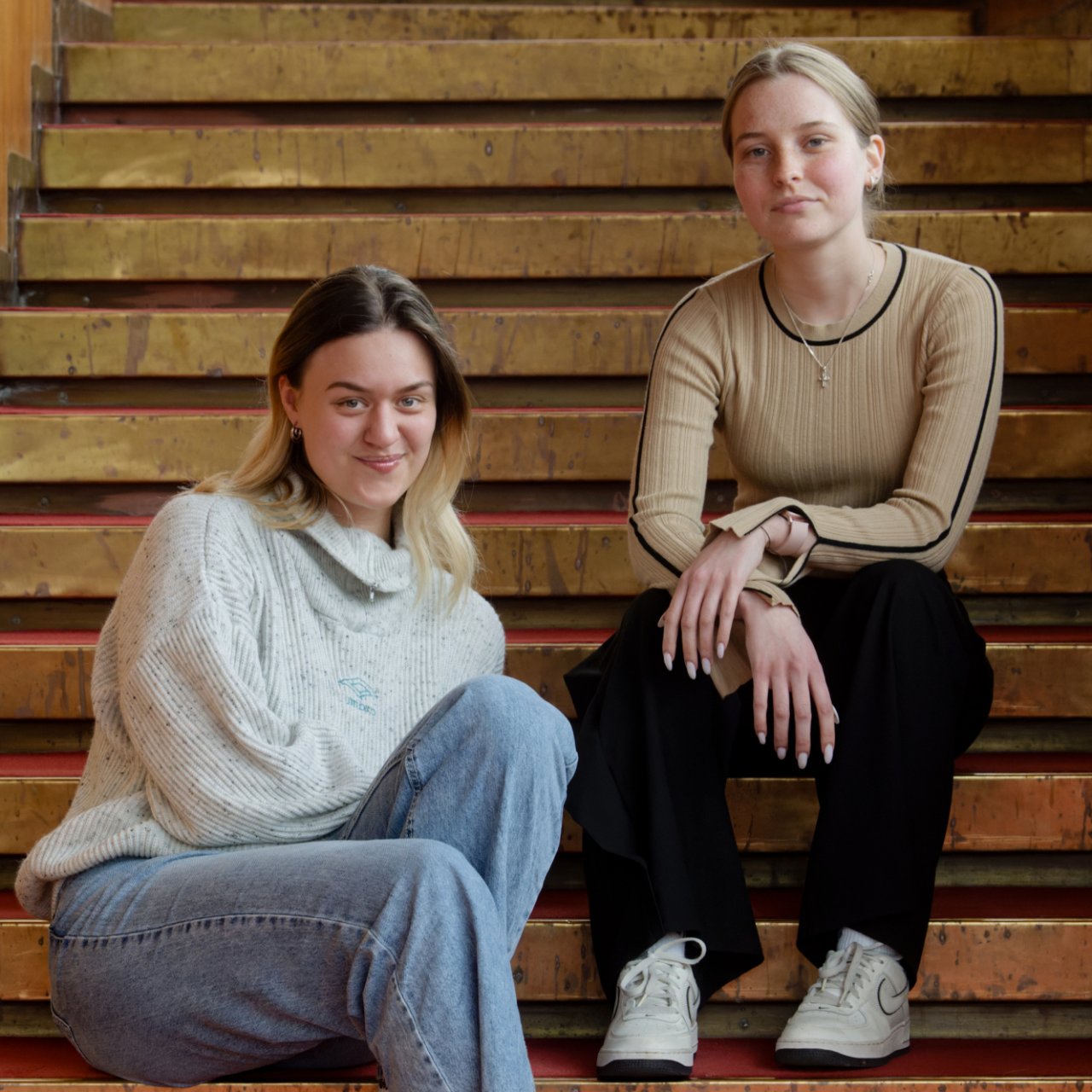 |
Director Gabrielė Česevičiūtė & Set and Costume Designer Augustė Ilginytė. They transfer the action of The Marriage of Figaro into a courtroom, where the events of a day fateful to the characters are reconstructed. According to the creators, this production speaks about the manipulation of public opinion and how easily we judge others while justifying ourselves. |
 |
Director Gabrielė Tumaitė, Set and Costume Designer Justas Sabastijanskas & Video Designer Austėja Glušokaitė. They link their interpretation to the image of modern high society, the growing divide between social classes, the culture of publicity, and the leaked files of the Jeffrey Epstein case. Here, the opera's action moves to Countess Rosina’s dressing room – a space where private life becomes a part of the public image. |
CREATIVE IMPULSE
In his piece “En Dor”, Edvinas Jakonis explores the concept of superstition: "When a connection is severed, humanity begins to speak with signs. Not because they hold power, but because the silence becomes unbearable. Symbols do not emerge from the First Garden, but from the earth. They promise order where it has long ceased to exist." The music was composed by Marija Paškevičiūtė, featuring an audio recording of Barbarina’s aria from W. A. Mozart’s opera “The Marriage of Figaro”.
Jonas Kertenis conceived the idea for “Temsta” (eng. “Darkness Falls”) while rehearsing the ballet “Čiurlionis”, where a lamp glowing in the dark serves as a vital scenic element. The characters of his miniature – poor moths and vain, affluent beetles – expose the themes of social hierarchy and class division central to “The Marriage of Figaro”.
Imogen Moss has created a humorous dance piece titled “Life Could be a Dream”, inspired by the comedic elements, deception, and infidelity found in “The Marriage of Figaro”. Capturing a 1950s aesthetic, the piece centers around four happily engaged couples preparing for marriage – until their eyes begin to wander.
Miryam Roca Cruz views Mozart’s social critique through the prism of contemporary society. The miniature “society.exe” transforms the opera's characters into modern archetypes navigating a world obsessed with image, influence, power, and constant self-display. To what extent are we authentic in society, and how much of what we do is merely performing a learned role?
MIRROR MARIA
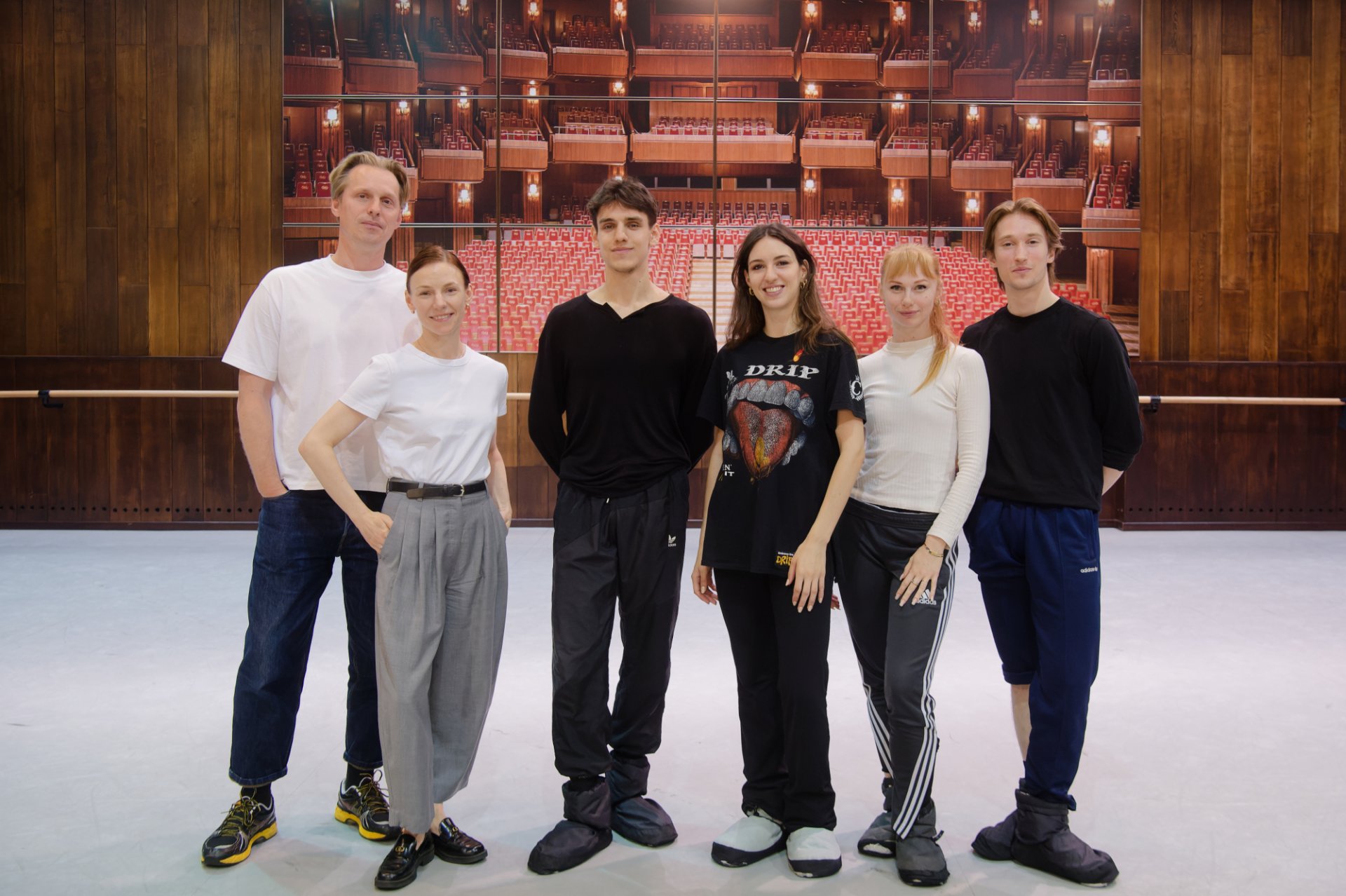
Mirror Maria is a collaborative project between composer Marija Paškevičiūtė and electronic music artist Dominykas Juknis (Mirror Slave) that has been developing for several years and makes its official debut at Festival X.
Drawing inspiration from the 20th-century musique concrète tradition and the conceptual legacy of experimental music pioneers like Éliane Radigue, Daphne Oram, and Delia Derbyshire, the duo presents a performance in the Red Foyer that reimagines canonical performance formats. Here, transformed fragments of the orchestral score from W. A. Mozart’s “The Marriage of Figaro” collide with postmodern interpretations, while the relationship between sound and space is heightened by custom-made visual installations. The result is a multi-layered experience where historical material is reconstructed not as an object of nostalgia, but as a living, continuously rewritten form.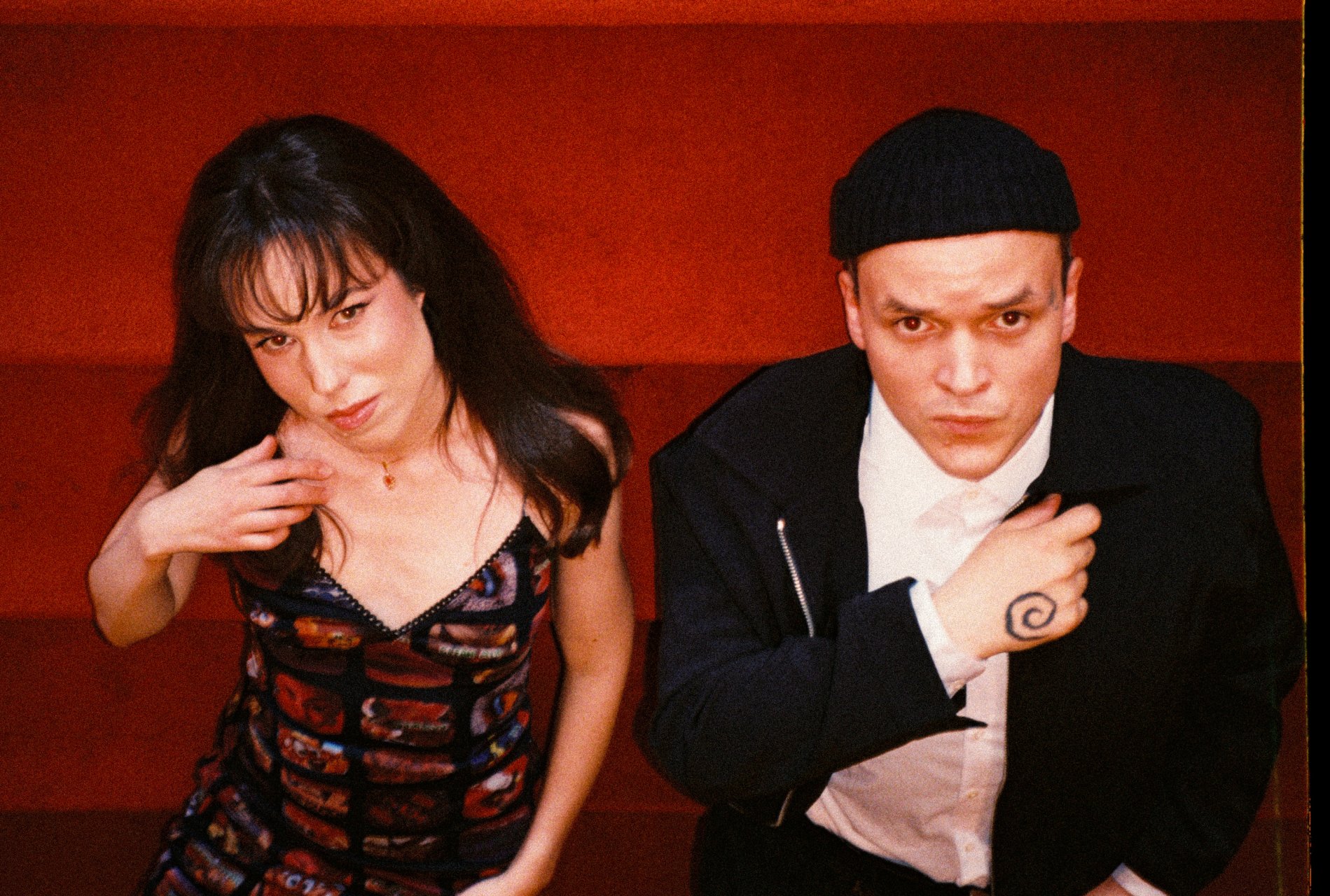
The Discovering X discussion series invites the audience to explore how the performing arts reflect and provoke our relationship with physicality, sexuality, social hierarchy, and generational divides. Together with creators and experts from various fields, we will discuss norms, taboos, societal shifts, the accessibility of art, and how to expand the boundaries of perception to engage new audiences. The discussions will take place in the Chamber Hall.
“The Silhouette Stage” is an interactive video installation by Karolis Paulikas that functions as an independent stage, casting the spectator as the primary performer. While moving between scheduled events, visitors can step briefly into the center of the piece, experiencing their own silhouette as a live, ever-shifting visual event. The installation will be available in the Marble Foyer throughout the festival.
Nikita Kiriuchinas is a music creator and performer emerging from Vilnius's underground cultural scene. He aligns the majority of his creative output with electronic music, shaping his sonic landscape through sound manipulation, synthesizers, drum machines, samplers, effects processors, and other analog hardware. His music will set the atmosphere in the Red Foyer during the festival intermissions.